
Your Italian Greyhound Puppy’s First Walks
Helping Bailey Build Confidence Outdoors and Meet Other Dogs Safely
A puppy’s first walk is one of those moments an owner tends to imagine long before it arrives. We picture an enthusiastic puppy stepping into the world, eager to investigate every sound and smell. Bailey had other ideas.
During her earliest walks, her reluctance was unmistakable. She would pull backwards on the lead as though asking to return home, her tail tucked firmly between her legs and any usual puppy enthusiasm conspicuously absent. The most outgoing Italian Greyhound may produce a similar performance when invited to walk in the rain. With Bailey, however, the weather was not the deciding factor. She appeared uncertain outside even on perfectly pleasant days, and we knew she needed a little more encouragement—not simply a better forecast.
Wait Until Your Puppy Is Ready to Go Outside
Before beginning public walks, ask your vet when your puppy will have sufficient protection from their vaccinations. The timing can depend on the vaccine used and the level of risk in your area, so follow the advice given for your individual puppy rather than relying on a date found online. Socialisation does not have to stop while you wait. A puppy can experience new people, sounds and places while being carried, spend time in a safe private garden and meet suitable, fully vaccinated dogs in an appropriate environment. The important thing is that these early experiences remain controlled and positive. Once Bailey was ready to walk outside, we began locally and kept her first outings short.
Begin With Confidence Rather Than Distance
The purpose of a puppy’s first walks is not to cover an impressive distance or tire them out. They are learning how the outside world works: traffic passes, gates move, strangers appear, dogs approach and every patch of grass contains information that apparently requires lengthy investigation. We allowed Bailey’s walks to grow gradually as her confidence and stamina developed. There was no need to decide that a particular number of minutes or miles had to be completed. If she was tired or overwhelmed, we could stop, give her time or return home. A short, positive walk is considerably more useful than a longer one that leaves a puppy frightened or exhausted. There will be plenty of time for greater adventures once their body and confidence have had the opportunity to develop.
Learn to Recognise Genuine Uncertainty
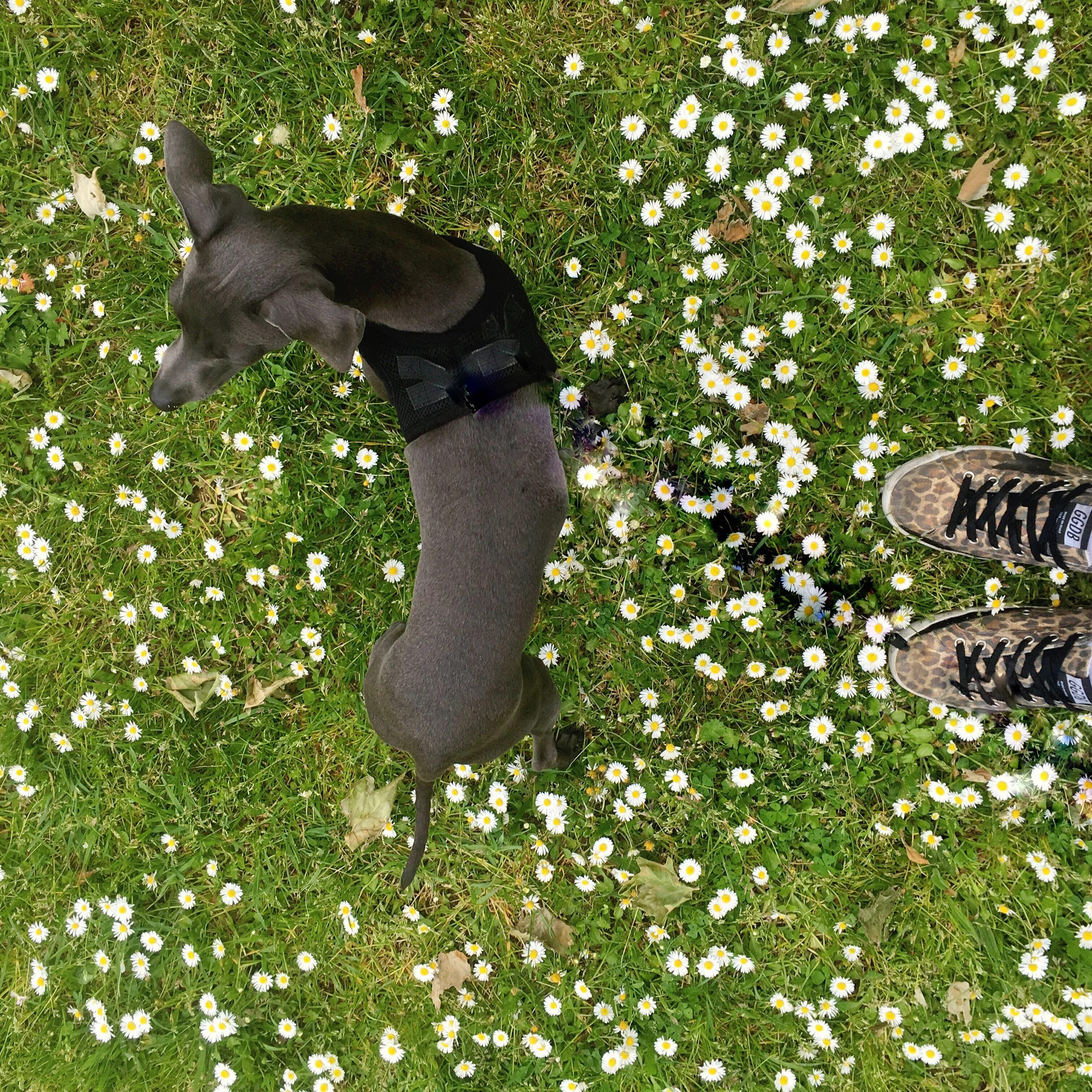
Bailey’s body language told us that her hesitation was more than a little stubbornness. She leant backwards, tucked her tail tightly underneath herself and looked generally unenthusiastic about taking another step. We did not want to drag her forwards or flood her with more than she could process. Instead, we tried to make each outing feel manageable. Calm encouragement, patience and food rewards gave her reasons to continue without turning the walk into a battle. If your puppy looks frightened, create a little more distance from whatever is worrying them. Let them observe from somewhere they can remain calm, reward their curiosity and try again another day if necessary. Confidence is rarely produced by forcing a puppy towards the thing they are trying to escape.
It is also worth learning what reluctance looks like in your own dog. An Italian Greyhound objecting to a downpour may be expressing a very firm opinion about the weather. A puppy who remains worried in calm, dry conditions may need a more gradual introduction to walking itself.
Keep Them Warm Without Overcomplicating It
Bailey wore a coat for most of her early walks. Although those outings were short, we still wanted to keep her warm and, wherever possible, dry. This did not mean dressing her in layer upon layer. One practical, well-fitting coat was enough. It needed to sit securely, allow unrestricted movement and avoid leaving loose areas in which a small leg could become caught.
Clothing should make an appropriate walk more comfortable; it cannot make extreme weather suitable for a young puppy. On particularly cold, wet or hot days, shorten the outing, choose a more suitable time or wait for better conditions. A missed walk is preferable to asking a puppy to cope with weather that makes the experience unpleasant or unsafe.
Calm Dogs Helped to Show Bailey the Way
In those early days, David accompanied a local dog walker on a handful of group walks. The dogs were a mixture of breeds, but they were all well behaved and none was especially boisterous. We hoped that walking beside settled dogs might help Bailey understand that being outside was nothing to fear. It appeared to make a difference. There was no single dramatic transformation; she simply hesitated a little less with each outing until walking began to feel normal. The temperament of the group mattered far more than its size. A nervous puppy is unlikely to gain confidence from being placed in the middle of a noisy, overexcited pack. One or two calm dogs—or a carefully managed group of dogs that are already comfortable together—can provide a much gentler example.
This is also a reminder that socialisation is not measured by the number of dogs a puppy meets. The quality of each experience matters. A few calm encounters can teach far more than being expected to greet every dog in the park.
Judge the Interaction Rather Than Size Alone
We never wanted Bailey to believe that larger dogs were something to fear. If a large dog approached calmly, showed polite curiosity and simply wanted to say hello, we welcomed the interaction. Some of Bailey’s favourite walks were with our friend’s Weimaraner, Proximo. He was considerably larger than she was, but he was always calm—a true gentle giant. Bailey felt entirely comfortable beside him.
The situations that concerned us were often less obvious. We occasionally encountered medium-sized dogs that were much heavier than Bailey but fast enough to keep pace with her. If their interest became an excited chase, we felt the safest choice was to remove Bailey from the situation before an accidental collision or tumble could occur. For us, this was one practical way to reduce an avoidable risk of a leg injury during puppyhood. It offered no guarantee against every accident, but we saw little benefit in allowing a much heavier dog to chase Bailey simply because both dogs appeared willing. Size alone cannot tell you whether two dogs are suitable companions. Look at the other dog’s behaviour, the intensity of the interaction and how your own puppy is responding. A large, gentle dog may be wonderful company, while a smaller but more physical playmate may be overwhelming.
Sensible caution does not require picking up an Italian Greyhound whenever another dog appears. Calm greetings and appropriate canine friendships are valuable. It simply means recognising when the style of play is becoming unsuitable and being prepared to create distance before it escalates.
A House Collar and Harness Worked for Us
On her early walks, Bailey wore a lightweight house collar carrying her identification tag, while her lead was attached to a harness.
A harness should fit securely, and it is sensible to let a puppy become familiar with it before expecting them to walk any distance. A worried puppy may pull backwards unexpectedly, so check the fit carefully and continue checking it as the puppy grows. In our opinion, a very young Italian Greyhound needs time to develop before wearing a traditional wide sighthound collar. We waited until Bailey had finished growing and was no longer a puppy, then chose a collar that fitted her properly. We would not buy a traditional collar oversized in the hope that a puppy will grow into it. Whether using a collar, harness or both, equipment should fit the dog you have today. Puppies change shape quickly, so something that fitted well a few weeks ago may already need to be adjusted or replaced.
Socialisation Does Not Mean Saying Hello to Everyone
A walk offers far more than contact with other dogs. Your puppy is also learning about bicycles, traffic, children, umbrellas, different surfaces and people moving in unexpected ways.
They do not need to investigate all of these things at close range on their first outing. Let them watch from a comfortable distance and reward calm interest. If they become tired, frightened or overexcited, take them home and try again when they are rested. Nor does your puppy need to greet every dog they pass. Sometimes the more useful skill is learning to notice another dog and continue walking with you. Choose introductions thoughtfully and give both dogs enough space to move away. For Bailey, progress was not marked by suddenly marching out of the door with complete confidence. It appeared in smaller changes: less resistance when we set off, a tail that was no longer held quite so tightly underneath her and a growing interest in what lay ahead.
Let the World Become Enjoyable Gradually
Bailey went from a timid puppy pulling towards home to a dog who genuinely loved her walks. That change did not require one perfect training technique. It came through short outings, repetition, calm encouragement and suitable dogs showing her that the outside world could be enjoyable. Your puppy’s first walks do not need to be ambitious. Keep them warm, choose manageable surroundings and pay attention to what their body language is telling you. Protect them from interactions that become too physical, while still allowing them to build positive relationships with dogs of different shapes and sizes.
The distance will come later. At first, success is simply a puppy returning home a little more confident than when they left.